Downsides of Epoxy Flooring: What They Don’t Tell You (San Angelo TX Guide)
Epoxy flooring is sold hard. Every contractor website, every YouTube video, every flooring showroom focuses on the glossy photos and the 20-year warranties. That’s a real part of the story — but not all of it. If you’re considering epoxy for your San Angelo garage, shop, or commercial space, here are the honest downsides you need to know before you write a check.
Bottom line up front: Epoxy has real weaknesses — especially in West Texas. A contractor who won’t talk about them is not a contractor you can trust.
1. Epoxy Can Peel — And West Texas Makes It Worse
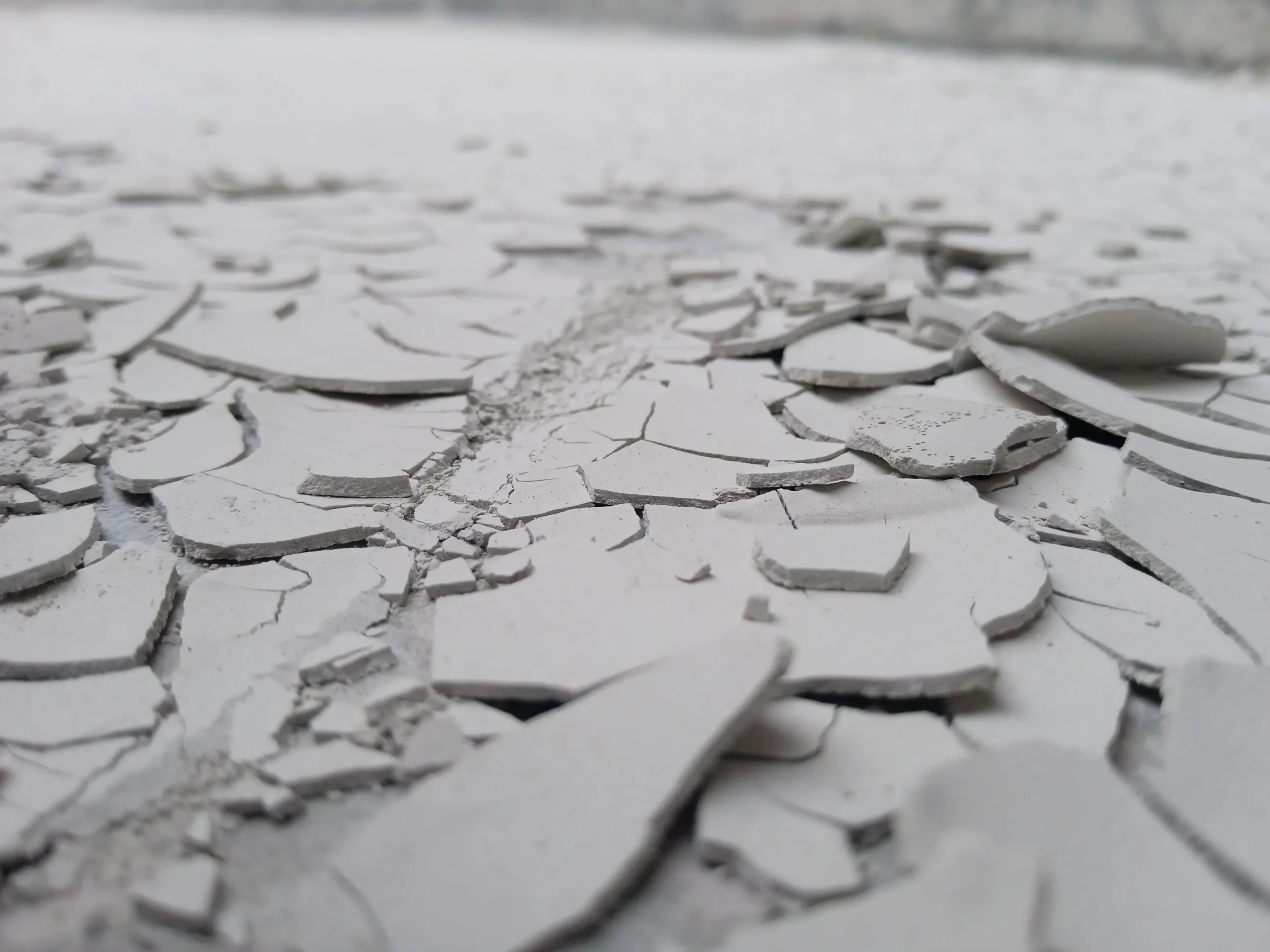
The most common epoxy failure is delamination — the coating separates from the concrete. This happens for two main reasons:
- Moisture vapor transmission: Concrete in San Angelo sits on clay and caliche soil that absorbs and releases moisture seasonally. If moisture vapor pressure pushes up through a slab at the time of installation, it will eventually lift the coating from underneath — no matter how good the epoxy was.
- Poor surface preparation: Epoxy will not bond to a smooth, un-profiled concrete surface. If a contractor acid-etches instead of diamond-grinding, the coating may look fine for 6 to 18 months — then peel in sections.
What to demand: Any legitimate installer will test moisture vapor emission rate (MVER) before applying epoxy and use a moisture-mitigating primer on slabs above threshold levels. Diamond grinding to a CSP 2-3 surface profile is non-negotiable.
2. Standard Epoxy Yellows in the Texas Sun
Standard epoxy base coats are not UV-stable. San Angelo averages over 214 sunny days per year and summer concrete surface temperatures regularly exceed 150°F. Direct sun exposure will yellow and chalk a standard epoxy coating within 2 to 3 seasons.
The Fix: UV-Stable Topcoat
A polyaspartic topcoat applied over the epoxy base coat is UV-stable and handles West Texas sun. This is not optional in our climate. Any epoxy system installed in a San Angelo garage with any direct sunlight exposure needs a polyaspartic topcoat. Make sure it’s in the quote.
3. Hot Tire Pickup Is a Real Failure Mode
If you drive a truck or SUV in San Angelo summer, your tires can reach 150°F to 180°F during a normal drive. When you park on a standard epoxy floor while the tires are still hot, the rubber bonds to the coating. When you drive off, it pulls chunks of epoxy with it.
This is not a defect in the epoxy. It’s a result of using a coating not rated for the thermal conditions. Polyaspartic topcoats have a significantly higher glass transition temperature than standard epoxy and resist hot tire pickup much better. If your contractor doesn’t bring this up, ask about it directly.
4. Epoxy Is Slippery When Wet
A high-gloss, solid-color epoxy floor can be dangerously slippery when wet — from rain tracked in, car wash water, or spilled liquids. This is a serious safety issue in garages and especially in commercial kitchens, pool decks, or any wet environment.
The Fix: Anti-Slip Additive
Aluminum oxide anti-slip additive broadcast into the topcoat provides traction without significantly changing the appearance. It should be standard on any pool deck, patio, or high-traffic commercial floor. For garages, it’s worth adding — especially with children or older family members using the space.
5. The Installation Window Is Strict
Standard epoxy has a limited application temperature window — typically 50°F to 85°F ambient temperature and 55°F or higher concrete surface temperature. In San Angelo’s climate, this creates real scheduling challenges:
- Summer: Afternoon temperatures too high for epoxy base coat. Morning installs only, with careful timing.
- Winter: Cold snaps can drop concrete surface temperature below application threshold. Rare in San Angelo but real.
Polyaspartic systems have a much wider application window and can be installed in West Texas summer heat when standard epoxy cannot. This is one reason we lean toward polyaspartic topcoats and often full polyaspartic systems for San Angelo jobs.
6. Epoxy Is Permanent — Bad Prep Means a Bad Floor Forever
Once epoxy is applied to a properly prepared slab, it is mechanically bonded. Removing it requires grinding. This means that a floor installed with poor prep or wrong materials — one that peels, bubbles, or yellows within two years — is not a simple fix. You will be grinding down to bare concrete and starting over.
The cost to remove a failed epoxy floor and reinstall properly often exceeds the original installation price. The only way to avoid this is to get the installation right the first time.
7. DIY Epoxy Kits Are Not the Same Product
Big-box store epoxy kits contain water-based, low-solids epoxy — sometimes as low as 25% to 40% solids. Professional-grade epoxy is 100% solids. The difference matters in film thickness, bond strength, and longevity. DIY kits typically last 1 to 3 years on a garage floor before peeling. Professional 100% solids epoxy with proper prep lasts 10 to 20 years.
| Feature | DIY Kit | Professional System |
|---|---|---|
| Epoxy solids content | 25–40% | 100% |
| Surface prep method | Acid etch | Diamond grind (CSP 2-3) |
| UV stability | No topcoat | Polyaspartic topcoat |
| Hot tire resistance | Poor | Good (polyaspartic topcoat) |
| Expected lifespan | 1–3 years | 10–20 years |
| Cost per sq ft | $0.50–$1.50 materials only | $4–$7 fully installed |
So Is Epoxy Flooring Worth It?
Yes — when it’s installed correctly. The downsides above are all avoidable with the right contractor, right materials, and right process. They are not reasons to avoid epoxy; they are reasons to ask the right questions before you hire anyone.
Questions to ask any epoxy contractor in San Angelo:
- Do you diamond-grind or acid-etch? (Must be diamond grind.)
- Do you test moisture vapor emission rate before installing?
- What is the solids content of your epoxy base coat?
- Does the system include a UV-stable polyaspartic topcoat?
- Does the topcoat include anti-slip additive?
- What is the warranty, and what does it cover?
If a contractor can’t answer all six questions clearly, keep looking. West Texas Floor Coating answers every one of them — and puts it in writing before we start.
Frequently Asked Questions
How long does epoxy flooring last in San Angelo, TX?
A professionally installed 100% solids epoxy system with diamond-ground prep and a UV-stable polyaspartic topcoat lasts 10 to 20 years in San Angelo conditions. A DIY kit or poorly prepped professional job may last 1 to 3 years before peeling.
Can epoxy flooring be repaired if it peels?
Small peeling areas can sometimes be spot-repaired, but it is difficult to blend repairs invisibly. Widespread peeling typically requires grinding the entire floor down and starting over — at full cost.
What is the best epoxy for a San Angelo garage?
A 100% solids epoxy base coat — either solid color or flake broadcast — topped with a UV-stable polyaspartic topcoat with anti-slip additive. The polyaspartic topcoat is what handles the Texas sun and hot tire issue. See our garage floor coating page for full details.
Is Epoxy Flooring Any Good for San Angelo Garages?
Yes — when properly installed. The downsides covered above are all avoidable. A professionally installed system with diamond-ground prep, 100% solids epoxy, and a polyaspartic topcoat gives San Angelo garages a floor that holds up to the climate, hot tires, and decades of use. The key is choosing a contractor who uses the right materials and won’t cut corners on prep. See our installation process to understand exactly what that looks like.