Hot Tire Pickup on Garage Floors: Why It Happens in Texas and How to Stop It
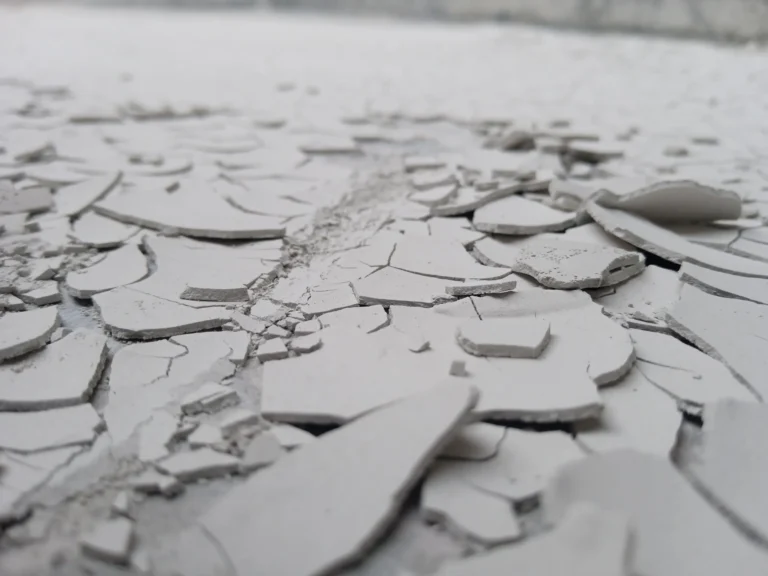
You pull into your garage after a summer drive in San Angelo. The truck has been sitting in the Texas sun, the engine is hot, and so are your tires. You park, go inside. An hour later you pull back out — and chunks of your brand-new epoxy floor come with you.
This is hot tire pickup. It’s the most common epoxy floor failure in hot-climate states, and it’s not your contractor’s fault or the epoxy manufacturer’s fault. It happens when the right coating isn’t matched to the right conditions.
Hot tire pickup is not a random failure. It’s a predictable outcome when standard epoxy is used in a Texas climate without the right topcoat system.
What Is Hot Tire Pickup?
Hot tire pickup (sometimes called hot tire delamination or tire marking) occurs when a warm vehicle tire bonds to an epoxy surface. The mechanism is straightforward chemistry:
- Vehicle tires heat up during driving — road friction and braking can push tire temperatures to 150°F–180°F in Texas summer conditions.
- When a hot tire contacts epoxy, heat softens the coating surface at the contact point.
- The rubber plasticizers in the tire bond chemically to the softened epoxy.
- When the vehicle moves, the tire pulls the bonded epoxy away from the slab — sometimes in large chunks, sometimes as a peel strip.
Why Texas Is the Worst-Case Scenario for Epoxy
Hot tire pickup happens everywhere — but Texas amplifies every factor that causes it:
1. Ambient and Concrete Temperatures
San Angelo averages 96°F in July and August. Concrete surface temperature in direct Texas sun regularly reaches 140°F–160°F during peak afternoon hours. That heat doesn’t leave when you park in a garage — especially a closed one. The floor is already warm, and a 160°F tire landing on a 130°F floor is a very different situation than the same tire on a 70°F floor in Minnesota.
2. Truck and SUV Culture
West Texas drives heavy. F-250s, Silverados, Tundras — heavier vehicles put more pressure on the tire contact patch, which concentrates the heat transfer to a smaller area. A 7,000-lb truck sits very differently on an epoxy floor than a 3,200-lb sedan.
3. Ranch Roads and Stop-and-Go Heat
Long highway drives followed by aggressive braking — common on West Texas ranch roads and during pulling maneuvers — spike rear tire temperatures. Parking immediately after this kind of driving, with no cool-down, is exactly the scenario that causes hot tire pickup.
What Determines Whether Your Floor Will Experience Hot Tire Pickup
| Factor | High Risk | Low Risk |
|---|---|---|
| Topcoat material | No topcoat or standard epoxy topcoat | Polyaspartic topcoat (standard or enhanced) |
| Topcoat thickness | Single thin coat | Full-build topcoat with proper mil thickness |
| Vehicle type | Heavy trucks, SUVs | Sedans, smaller vehicles |
| Parking habit | Park immediately after long drive | Brief cool-down before parking |
| Climate | Hot-climate states (TX, AZ, FL) | Northern states with milder summers |
| Garage type | South-facing, direct sun, poor ventilation | Shaded, north-facing, ventilated |
The Real Fix: Polyaspartic Topcoat
Standard epoxy has a glass transition temperature (Tg) — the point where it begins to soften — typically around 120°F to 140°F. That’s below Texas summer concrete temperatures. When the floor approaches or exceeds that threshold, tire bonding becomes increasingly likely.
Polyaspartic coatings have a glass transition temperature of 180°F to 220°F depending on formulation. This is why a properly spec’d polyaspartic topcoat over an epoxy base coat nearly eliminates hot tire pickup in normal Texas driving conditions.
What to Ask Your Contractor
- “What is the glass transition temperature of your topcoat?” — Any legitimate polyaspartic should be above 180°F. If they don’t know, that’s your answer.
- “Is your topcoat polyaspartic or polyurethane?” — Polyurethane has a lower Tg than polyaspartic and provides less hot tire resistance.
- “What mil thickness is your topcoat?” — A proper topcoat should be 3–4 mils dry film thickness minimum.
Can You Repair a Floor That’s Already Failed?
If the hot tire pickup is limited to specific tire-contact zones and the rest of the floor is intact, partial repair is sometimes possible — but never invisible. The repaired zones will have visible texture differences from the original coating.
If the failure is widespread, the only correct repair is grinding the entire floor to bare concrete and reinstalling with the right system. This is why it costs more to fix a failed floor than to install the right system the first time.
What We Do Differently in San Angelo
Every garage floor installation West Texas Floor Coating performs includes a UV-stable polyaspartic topcoat as standard. We don’t offer a “base-only” option for Texas garages because the conditions here make it an installation we’d be called back on within two summers.
We also use a full-build topcoat application — not a thin seal coat — because film thickness matters for both hot tire resistance and long-term durability. See our polyaspartic floor coating page for technical details, or our garage floor coating page for what a complete San Angelo system looks like.
Frequently Asked Questions
Does hot tire pickup happen with all epoxy floors?
No. A properly spec’d polyaspartic topcoat with adequate film thickness eliminates hot tire pickup under normal driving conditions. It is specifically a problem with floors that have no topcoat, a polyurethane topcoat, or an undersized polyaspartic topcoat.
How hot do tires actually get in Texas?
Under normal highway driving conditions, tire surface temperatures range from 100°F to 160°F. Extended highway driving, towing, or aggressive braking can push temperatures above 180°F on the rear tires. Add an 85°F San Angelo afternoon and a south-facing concrete floor and you have a worst-case scenario for standard epoxy.
Can I prevent hot tire pickup by letting my car cool down first?
Partially. A 15–20 minute cool-down before parking on a standard epoxy floor reduces risk significantly. But it doesn’t eliminate it in Texas peak summer conditions, and it’s not a practical behavioral solution for most homeowners. The correct fix is the right topcoat — not a new parking habit.